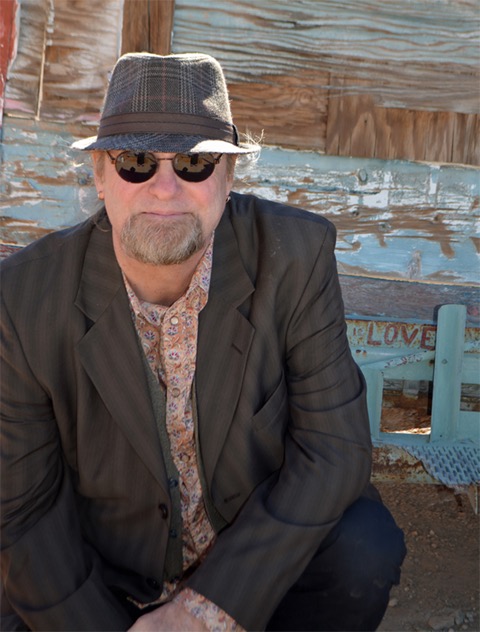
Scott Shaw Biography
Scott Shaw was born in Los Angeles, California. He is a prolific Author, Actor, Filmmaker, Composer, Artist, Martial Artist, Journalist, Photographer, and Blogger. He is also a Seminar, College, and University Instructor. During his youth Shaw became involved with two primary elements that have come to define much of his life. The first was the Martial Arts and the second was Eastern Mysticism.
THE MARTIAL ARTS
Scott Shaw was first exposed to the fighting arts as a young boy by his father who had earned the Black Belt in Jujitsu during the World War II era and his uncle who was a professional boxer prior to World War II. Shaw formally began studying the Korean martial art of Hapkido, (then known at Ho Shin Mu Do), at the age of six. Enthralled with the Martial Arts Shaw studied daily and at the age of eleven earned his Black Belt. Soon after this Shaw was introduced to Taekwondo and quickly earned his Black Belt in Taekwondo, as well. Shaw's instructors include: Sun, Duk Yun, Choi, Sea Oh, Yoon, Hee Hwan, Takeda, Harias, and Lee, Sung Soo, among others. While attending California State University, Northridge Shaw began teaching the martial arts on a professional basis.
Throughout the years Scott Shaw has been certified by various Asian and Occidental Martial Art Associations from his 1st through his 8th Degree Black Belt. In 1987 Shaw was promoted to 7th Degree Black Belt in Taekwondo. He was the first non-Korean to be awarded this rank in Moo Duk Kwan Taekwondo. His advanced Taekwondo certifications have been conferred by the Moo Duk Kwan and Ji Do Kwan branches of Taekwondo. In that same year he also earned the 7th Degree Black Belt in Kumdo. In 1992 Shaw was awarded the 7th Degree Black Belt in Hapkido Moo Hak Kwan, a Korea Hapkido Federation registered kwan. In 1996 Scott Shaw became the first non-Korean ever to earn the 7th Degree Black Belt awarded by the Korea Hapkido Federation. In 1999 Shaw earned the 8th Degree Black Belt in Taekwondo. In 2001 he was awarded the 8th Degree Black Belt in Hapkido He also holds a 7th Dan Black Belt in Aikijutsu awarded in 1999. Scott Shaw is the founder of Ki Sul Kwan Hapkido and the President of Hapkido Taekwondo International.
Scott Shaw has been a mainstay in Martial Arts Media for well over three decades. His numerous Articles on the Martial Arts have been published by the most respected journals in the industry; including: Black Belt, Tae Kwon Do Times, Inside Karate, Inside Taekwondo, and Karate Kung Fu Illustrated, to name just a few. In 1994, Unique Publications, a leader in Martial Art Publishing and Video Production, asked Shaw to create a four-part Instructional Video Tape Series on Hapkido. In 1996, Tuttle Publications, one of the most highly esteemed publisher of books on the Martial Arts in the world, published Shaw's book, Hapkido: Korean Art of Self-Defense. In 2002 they requested that he write the book, Taekwondo Basics, and in 2006 they asked him to write the book, Advanced Taekwondo. In 1998 Shaw's book, The Warrior is Silent: Martial Arts and the Spiritual Path was published and released via Simon & Schuster. In 1997 Shaw authored The Ki Process: Korean Secrets for Cultivating Dynamic Energy, followed by Samurai Zen in 1999, and The Tao of Self-Defense in 2000 for Red/Wheel Weiser, then Samuel Weiser, Inc. His book Chi Kung for Beginners was published by Llewellyn Publication in 2004. In addition to these titles, he has written several other Books on the Martial Arts, published by industry leaders. Many of these books have been translated into various languages and published across the globe.
Click to View Scott Shaw's Biography from the Martial Arts Encyclopedia.
EASTERN MYSTICISM
During his youth Shaw was additionally drawn to Eastern Meditative Thought. This inclination led him to study in both Asia and the West. Shaw is an initiate of Buddhist, Hindu, and Sufi sects. Throughout his youth he studied with such renowned teachers as Swami Satchidananda, Pir Vilayat Inayat Khan, Bhagwan Shree Rajneesh, and Thich Thien-An. By the age of eighteen he was a certified instructor of Yoga and Meditation. Shaw is also a Frater Rosae Crucis of the Rosicrucian Order. He has authored numerous articles and a number of Books on Zen, Yoga, and Human Consciousness. His book, Zen O'clock: Time to Be was published by Red/Wheel Weiser in 1999. They then followed up by publishing his books: About Peace: 108 Ways to be at Peace When Things are Out of Control in 2001, Nirvana in a Nutshell in 2002, and The Little Book of Yoga Breathing: Pranayama Made Easy in 2004.
Many of these books have been translated into various languages and published across the globe by established international publishing houses.
THE ARTS
Throughout his life Shaw has embraced the arts. He has been an active Musician since the age of six having composed and created a vast catalogue of music. He has seen a large amount of Poetry, Prose, and Literary Fiction published in literary journals and by presses from the 1970s forward. He is an avid painter and photographer. His art and photographs have appeared in numerous galleries and publications. Click on the link(s) to view: Scott Shaw Art and Photography, Scott Shaw Art at Saatchi Gallery London, Scott Shaw at Fine Art America, The Scott Shaw Snapshot Gallery on Tumblr, The Scott Shaw Pholog on Flickr, Scott Shaw on Instagram, and Scott Shaw Photo Books.
FILMMAKING
Though Scott Shaw has worked in all formats of filmmaking he is widely regarded as one of the pioneers of video filmmaking. After initially appearing as an Actor in Films, Television Series, and Commercials, Shaw moved forward onto Producing and Directing Feature Films, Documentaries, and Music Videos. In 1991 Scott Shaw developed a new style of filmmaking, (in association with Donald G. Jackson), that he titled, Zen Filmmaking.
Shaw designed Zen Filmmaking in order to bring the essence of Zen into the filmmaking process. Some of the primary tenets of Zen Filmmaking are: following the path of least resistance, never relying upon formalized structure, and allowing the moment to be the only guiding factor in the creation of a film. Shaw formulated the concept of Zen Filmmaking as a means to allow spontaneous creativity to be the only guide on the path to a film's creation in order to help all filmmakers discover a more direct approach to actualizing their filmmaking dreams.
Click to View: Scott Shaw Biography Contemporary Theatre, Film, and Television.
To view some Scott Shaw Zen Films and Zen Documentaries on-line visit: Scott Shaw Zen Filmmaking on YouTube or Scott Shaw Zen Filmmaking on Dailymotion. To pick up a DVD visit the Zen Film DVD Shop.
THE SCOTT SHAW BLOG
Scott Shaw has been a frequent blogger over the past several years at The Scott Shaw Blog. From this, there has been several volumes of his Scott Shaw Blog Books published.
TRAVEL
Beginning in the late 1970's, Scott Shaw began to continually return to Asia and the Middle East—spending extended periods of time in these geographic regions. He has continued this tradition and frequently returns documenting obscure aspects of Asian and Middle Eastern Culture in words and on film. Many of Scott Shaw's Books of Photography present photographs from his world journeys.
EDUCATION
Scott Shaw's academic background is in the Social Sciences and the Humanities, though he now predominately teaches courses on the Cinematic Arts. He studied Cultural Geography as an undergraduate, and completed graduate studies in Cultural and Urban Geography, Humanities, (with a focus on Literature), and Asian Studies. In addition to these academic credentials Shaw also holds a Master of Herbology degree, a Diploma in Applied Psychology, is a certified Gestalt Therapy Practitioner, was awarded Reiki Master Certification, NLP Master Practitioner Certification, and has a Master Certificate in Ayurvedic Medicine. He has taught courses at such educational institutions as California States University, Northridge, California State University, Los Angeles, University of California, Los Angeles, Santa Monica College, and Los Angeles Harbor College.
For additional information about Scott Shaw visit: